

What It's Really Like to Have a Learning Disability
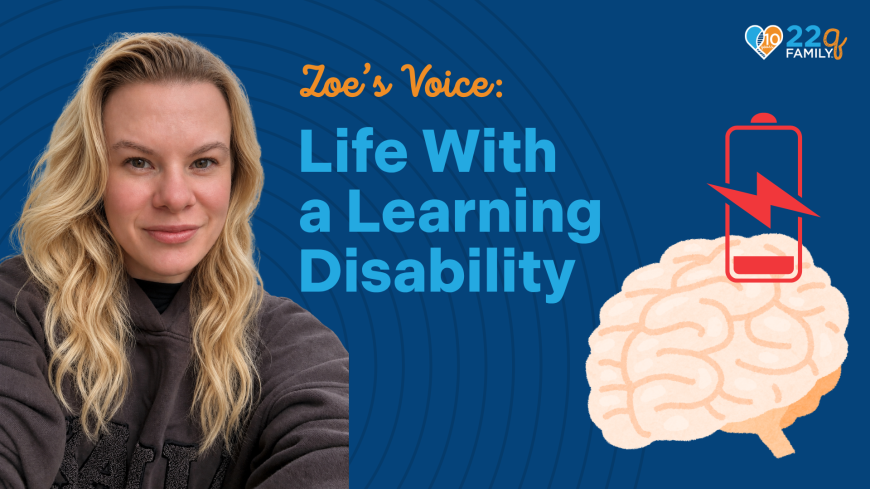
From the moment I wake up, my brain is already working harder. Processing conversations, remembering information, concentrating, making decisions, dealing with sensory input, managing anxiety, and navigating everyday life all use precious energy. These are things many people don’t even realise they’re doing, but for someone with a learning disability, they can take a huge amount of mental effort.
If you’ve ever met me, you might think I’m just like everyone else. I smile, I laugh, I work, I create content, and I try to live life to the fullest. What many people don’t see is the amount of energy it takes me to do the things that others often don’t have to think about.
The best way I can describe living with 22q11.2 deletion syndrome and a learning disability is to imagine that everyone wakes up with a phone battery.
Most people start the day at 100%, but I don’t.
Some mornings, I wake up at 65%. On more difficult days, it feels closer to 40% before I’ve even got out of bed. From the moment I wake up, my brain is already working harder. Processing conversations, remembering information, concentrating, making decisions, dealing with sensory input, managing anxiety, and navigating everyday life all use precious energy. These are things many people don’t even realise they’re doing, but for someone with a learning disability, they can take a huge amount of mental effort. Every task drains my battery a little more.
Getting dressed? Minus 5%.
Driving to work? Minus 10%.
Remembering instructions? Another 10%.
Trying to keep up with conversations? Battery dropping again.
By lunchtime, I can already feel my energy disappearing. It’s not because I’m lazy, and it’s not because I don’t want to be there. My battery is simply running lower much faster than most people’s.
For many people living with 22q11.2 deletion syndrome, fatigue can be part of daily life. There can be many reasons for this, including heart conditions, thyroid problems, disrupted sleep, anxiety, medications, and the extra mental effort that comes with learning differences. Not everyone with 22q experiences fatigue in the same way, but for many of us, it’s a very real challenge.
For years, I blamed myself.
I wondered why everyone else seemed to cope so much better. Why could they work all day, go out afterwards, exercise, and still have energy left? Meanwhile, I often felt completely exhausted just from getting through the day.
It wasn’t until I began learning more about my diagnosis that everything started to make sense. I realised that my battery wasn’t faulty—it was simply working harder. Understanding that changed how I viewed myself. Instead of feeling guilty for needing to rest, I started recognising that rest isn’t giving up—it’s recharging.
Just like you wouldn’t expect a phone on 15% battery to perform like one that’s fully charged, we shouldn’t expect ourselves to keep going without giving ourselves time to recover.
The biggest lesson I’ve learned is to stop comparing my battery to someone else’s.
Success doesn’t always look like climbing mountains. Sometimes success is getting out of bed. Sometimes it’s making it through a day’s work. Sometimes it’s simply asking for help when you need it. And every single one of those achievements deserves to be celebrated.
If you’re reading this and you have 22q11.2 deletion syndrome, or you support someone who does, I want you to remember this: Your battery may drain faster than other people’s, but that doesn’t make you any less capable.
It doesn’t make you any less valuable, and it doesn’t make you any less worthy of chasing your dreams.
While you might need to recharge more often or take life at a different pace, you are still moving forward!
Living with 22q has taught me that strength isn’t about never getting tired.
Strength is getting back up, even when your battery feels almost empty. So be kind to yourself and charge your battery without guilt.
Because the world needs you—not at 100% all the time—but exactly as you are.
With love,
Zoe Castle
Published Author | Disability Advocate | Proud member of the 22Q community