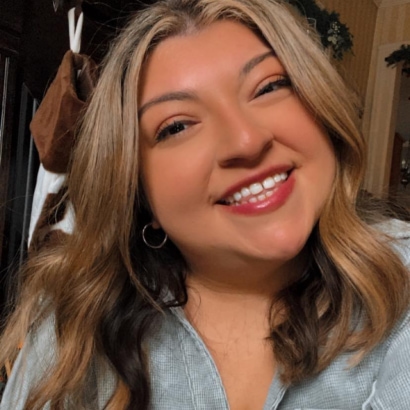
The Prevett Family
Lexi was immediately admitted to the NICU at Memorial Health in Savannah, GA after she was born due to her weight. It wa…
by Emily Perl Kingsley
c1987 by Emily Perl Kingsley. All rights reserved
I am often asked to describe the experience of raising a child with a disability – to try to help people who have not shared that unique experience to understand it, to imagine how it would feel. It’s like this……
When you’re going to have a baby, it’s like planning a fabulous vacation trip – to Italy. You buy a bunch of guide books and make your wonderful plans. The Coliseum. The Michelangelo David. The gondolas in Venice. You may learn some handy phrases in Italian. It’s all very exciting.
After months of eager anticipation, the day finally arrives. You pack your bags and off you go. Several hours later, the plane lands. The stewardess comes in and says,”Welcome to Holland.”
“Holland?!?”you say. “What do you mean Holland?? I signed up for Italy! I’m supposed to be in Italy. All my life I’ve dreamed of going to Italy.”
But there’s been a change in the flight plan. They’ve landed in Holland and there you must stay.
The important thing is that they haven’t taken you to a horrible, disgusting, filthy place, full of pestilence, famine and disease. It’s just a different place.
So you must go out and buy new guide books. And you must learn a whole new language. And you will meet a whole new group of people you would never have met.
It’s just a different place. It’s slower-paced than Italy, less flashy than Italy. But after you’ve been there for a while and you catch your breath, you look around…. and you begin to notice that Holland has windmills….and Holland has tulips. Holland even has Rembrandts.
But everyone you know is busy coming and going from Italy… and they’re all bragging about what a wonderful time they had there. And for the rest of your life, you will say “Yes, that’s where I was supposed to go. That’s what I had planned.”
And the pain of that will never, ever, ever, ever go away… because the loss of that dream is a very very significant loss.
But… if you spend your life mourning the fact that you didn’t get to Italy, you may never be free to enjoy the very special, the very lovely things … about Holland.

Receiving any diagnosis for yourself, your child, family member or loved one can be overwhelming and isolating. The journey through a 22q diagnosis can come with many challenges and worries. But our foundation mission focuses on three components that can help in supporting you along this unique journey: Awareness, Education and Connection. By educating ourselves, medical professionals, and school staff, we can work to create the best quality of life for individuals diagnosed with 22q differences. Preparing families with the necessary foundation of medical information will allow them to not only be their loved one’s advocate, but to also be the expert, even in a room of medical professionals. And more importantly, it is important to create a network, not just between parents of children with 22q, but also between those diagnosed with the disorder. We understand that 22q is a lifetime diagnosis, so supporting the entire family is beneficial.
The diagnosis of 22q differences usually begins with a thorough physical examination by a healthcare provider, along with a review of the individual's medical history and symptom presentation. Genetic testing may also be used to confirm a diagnosis of 22qDS or 22qDUP and identify the specific location of the deletion on chromosome 22.
Some common methods of genetic testing for 22q deletion syndrome include:
This technique uses microscopic probes that bind to specific areas of chromosome 22 and emit light, allowing lab technicians to visualize any missing or duplicated genetic material. FISH analysis is a reliable and widely used diagnostic tool for 22q differences.
Array CGH is a newer genetic testing technique that can detect small differences in chromosome number and structure as well as nested deletions or duplications that could be missed by traditional karyotyping.
This newer approach in genetic analysis involves decoding the individual's complete genetic information, which can help identify specific gene variants and diagnose 22q differences and other genetic conditions.
In some cases, 22qDS may be diagnosed prenatally through chorionic villus sampling or amniocentesis or using newer, safer and less-invasive, prenatal testing technologies.
It is strongly advised that if there is any concern of 22qDS, it should be evaluated by a qualified genetic specialist who can guide the patient through the diagnosis and help design an individualized care plan that includes treatment and management strategy. Early diagnosis and management are critical in optimizing health outcomes in individuals with 22qDS.
Once receiving a diagnosis, it is encouraged to follow up care at a 22q clinic. Find a clinic near you here.