

A Family Copes With 22q
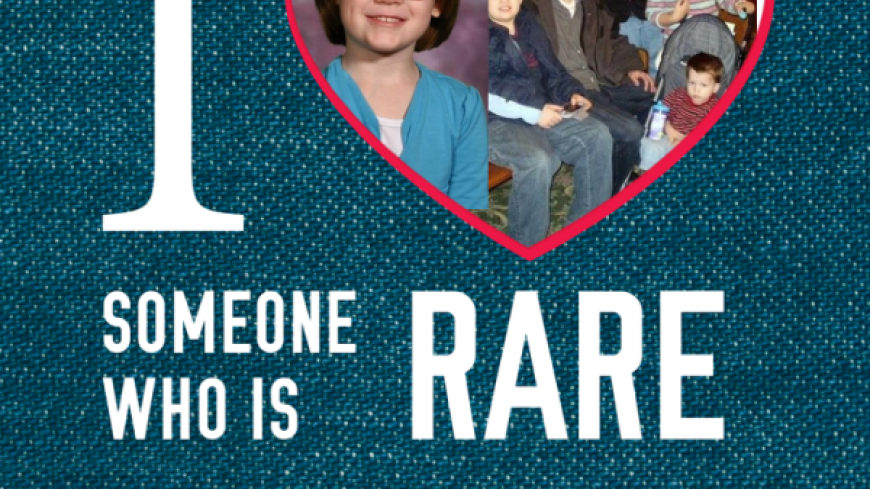
My name is Amanda Ripsam, I am 30 years old. I was born and raised in Toronto, Ontario, Canada. I now live in Michigan. I have 22q11.2 Deletion Syndrome, sometimes called DiGeorge Syndrome. Something that’s very unique about my family is that there are five of us who have DiGeorge: My father, my two half-brothers, my half-sister, and I. Unfortunately, one of my half-brothers passed away at the age of six. He died of a brain hemorrhage/seizure in his sleep. I have a beautiful young daughter who is five years old. Her name is Isabella. She has DiGeorge, too.
This is my story. My earliest memory is from when I was in kindergarten. I lived with my mother in an apartment in Toronto, Ontario, Canada. My parents were married after I was born, but divorced a year later. I have no memories of my father being in my life until I was a teenager. My mother was raising me on her own until she met Al. We moved to Pickering, Ontario to live with Al in a bungalow style house in the middle of a rural area. There was a block of houses and then nothing for miles and miles around. I started first grade in a new school in a new house with a new man in my mother’s life and mine. No one knew I had DiGeorge while I was growing up.
The house was a brick house with a huge back yard and a huge front yard with the neighbor’s apple tree hanging over the front yard fence. The house forever haunts my dreams, during the day and night. I have flashbacks even while writing this story. I am thirty now. I know I am safe and happy, yet the feeling of remembering my abusive childhood is one of overpowering fear. Al was a tall man who had adult children from his first marriage. I stayed in the old bedroom of one of his sons. It was train-themed. He never made it my room with my style and likes. In fact, my room became a dungeon. I was locked in my room. The doorknob on the outside was locked and that was the only way in and out of the bedroom. If I had to go to the bathroom, I had to pee in a bucket. While Al was home, the bedroom is where I had to be.
I was allowed to go to school only dressed in boy clothes, my body unwashed. I was only allowed to shower every three days, because that was one of Al’s many rules. My escape was school. I longed for weekend visits with my grandma, where I was allowed to be a normal child. I would scream and cry, “Please don’t make me go back there!”, but Grandma didn’t know the abuse that was going on. I didn’t have the ability to communicate effectively with adults because I wasn’t allowed to speak around Al without fear of being slapped if I said something he didn’t like. Al used anything he could to slap me too: belts, TV remotes, shoes. He even had me stand in the corners on my knees for hours until he got home. Till this day I wonder “What did I do wrong?” “What made him do what he did?” I cannot even confront him, because he died of a heart attack when I was twelve.
This type of abuse went on for many years. I do not remember meals other than the lunch box I was given for school. Al would make the lunches so teachers never got on to what was going on. He always made sure to leave bruises under my clothes, meaning on my arm, but never my face.
I had rope marks on my arms from being tied up hog style. These are the memories which today, as an adult, cause me to wake up with night terrors and night sweats, crying and sobbing or sometimes fighting Al off in my sleep. One day my mother snapped. I was in third grade. I was getting ready for bed, and my mother was brushing my teeth. My mother wanted me to lift my tongue, and I just couldn’t. So, my mother slapped me for not paying attention and for not listening to her. I still have the scar across my right cheek. The slap left a huge, noticeable bruise; I went to school and had to tell a lie to my teacher that I hadn’t listened to my mother when it was time to put my coloring crayons away. My teacher called Children’s Aid (Social Services). Little did she know the impact. She probably saved my life.
The police came to the school and picked me up. There was a social worker in the back seat telling me, “It’s ok. You’re safe now.” She said, “Everything is going to be all right.” That social worker started the investigation and asked me tons of questions. I denied any type of abuse at the time because I was too scared of what would happen if Al found out and I had to go back home. I told a lawyer who was appointed to represent me that my three wishes were for everyone to have peace, for the stars to stay in the sky, and that I wanted to live with my grandma.
I was placed in a foster home until my grandma was able to get court-ordered custody of me. I believe I was at the foster home for a year. I still attended the same school, wondering if Al would ever show up. He did one day, saw me behind a fence playing with some friends, and said, “Can I have a hug?” I told him “NO!” and ran to my teacher, and he took off.
My foster home was full of kids who were there for different kinds of reasons. I shared my room with another foster kid. The family was a very nice, warm, loving Jamaican family. I only remember their first names: Joy and Lambert. They gave me my first taste of Jamaican oxtail with beans and rice. That became my new favorite dish.
I learned how rules were really made. There was a list of rules in our bedrooms for us to remember—cleaning up after ourselves, as well as keeping the bedrooms clean. I learned how to do housework the right way without being yelled at if I washed a dish the wrong way. I had Christmas there that year. I got my first pair of ice skates from my foster father, the only man who showed he cared about me other than my grandpa.
My grandma finally got custody of me when my mother gave up her rights. When I saw my grandma for the first time after a year, I had forgotten what she looked like, but I knew it was her by her perfume and her voice. I started at a new school just after Christmas in fourth grade. I started to learn how to read and write. I also started to be taken to the doctor’s. I even got my first pair of glasses, and they were sparkly pink.
At this point in my life, my father stepped in. He had fixed his act and was no longer a drunk. He was still a deadbeat, but not a drunk. My dad asked me if I wanted to go on weekend visits to his place now that I was living with my grandma. I went a few times, met my stepmother, and she was very nice.
She had another kid who was younger than me. He was my stepbrother now. My stepmother and my dad had their first baby together, and I now have two half-brothers.
The new baby was fine until he turned one. Then he had a seizure after eating turkey for Christmas dinner. My dad and stepmother rushed him to the hospital, and the doctors there did a ton of tests, including a FISH genetic test. The test results came back, and the doctors told my stepmom and dad that the baby had DiGeorge Syndrome and that it was so rare the doctors couldn’t find any research on it other than from 1984, the year after I was born.
They started to treat my baby brother for hypocalcemia and low iron. He needed meds to make sure he didn’t seize up. Even so, he still had seizures from time to time. My stepmother and dad decided to have another child. Knowing my brother had DiGeorge, they got my sister tested at birth. She was also put on treatment for hypocalcemia. Every day both kids took their meds, but something was wrong with them growing up. They had trouble learning. They had trouble listening. They had trouble potty training.
My dad and stepmom had more doctor visits and testing done. They decided to have themselves tested as well. My stepmother’s FISH test came back normal, but it turned out that my father has DiGeorge.
My father never really looked into how to get treatment for himself or how DiGeorge affected him. He was fine and didn’t show any symptoms other than the facial features and the hearing loss. At this time I was bouncing back and forth between living with them or with my grandma. I decided at fourteen to give moving in with my dad and step-mom a try. I turned into the maid, the cook, and everything else my dad and stepmom were too lazy to do. The only thing my dad did was get a restraining order on my mother after she and her mother visited me at school one time.
I moved back in with my grandma around age fifteen, and I went to a school I wanted to go to. I was tested to be in general or advanced classes, so in junior high I took general classes, but I was bored with those. In high school, I took mostly advanced classes except for math. I failed math class every year and only passed it in summer school.
Summer school is where I met my first love. I went on my first date and had my first kiss. I was once again living at my father’s. I was sixteen now. The next day, my stepmother overdosed on Tylenol. I had to call 911 to get an ambulance to take her to the hospital so we could get her stomach pumped. She was dealing with depression because of the two kids having DiGeorge and my father having DiGeorge and not being able to get treatment of any kind because doctors didn’t know what to do.
My stepmother was in and out of hospitals. To escape, I spent more and more time with my high school boyfriend. I started to focus more on my friends than on being a brainer at school. I started to skip class just so I could get away from the world. I decided to move back in with my grandmother for good because my grandpa had cancer. Moving back in with my grandma was the best choice I could have made. I was loved. I was cared for. I was protected from the outside world. I started a babysitting job. I also got my first real job at McDonald’s. Then I moved on to a job at a photo lab in a grocery store.
I was going to school every other day as well as doing my co-op in a hair salon every other day to earn school credit hours. I learned all the ropes—how to shampoo and blow dry clients’ hair, how to sweep the floors, wash the windows, answer the phones, and dye clients' hair. I learned how to do nails and makeup, and I learned how to run the tanning bed. I learned the ins and outs of what was needed to run a salon.
I learned how to do it all. I even learned how to do a basic hair trim. I got to play with a mannequin, practicing up-dos, perm rods, and highlighting with conditioner. That was my favorite part. I learned how to socialize in ways that earned more tips from customers, which I liked as well. I learned how to sell hair products and do bookkeeping. Then I started to look for a job, because my co-op time was almost up. I was hired at a salon as an assistant and kept my photo lab job, all while I was in high school. Between those two jobs and babysitting, I was doing well in school until twelfth grade. I failed one English class and didn’t get the credit because I was too busy having fun with my boyfriend. My biggest regret is not finishing my high school diploma, as I was just one credit short. I didn’t go back because I thought I was doing well with my jobs, and I needed the money to start living on my own.
My boyfriend and I started to drift farther apart. I started chatting with people online and found a guy who is now my husband. We have been together since February 23, 2005.
When I was twenty-two, I went back to Toronto and got tested for DiGeorge Syndrome after my stepmother pleaded with me to get tested. I tested positive. Around the same time, my stepmother gave birth to my baby brother, who passed away at age six. He, too, tested positive for DiGeorge Syndrome.
I was twenty-four when I got married and became pregnant. It was a complicated, high-risk pregnancy. I was sick nearly every day. I often threw up, began passing out, and was eventually put on bed rest. I refused an amnio test since I knew I could have my baby and do a FISH test afterward. I wasn’t planning on aborting my child, healthy or unhealthy.
I developed hypocalcemia as my daughter was pulling calcium from me. No matter how many calcium supplements I took or how much milk I drank, it wasn’t enough. My calcium levels stayed at three, and my iron levels hovered around six. I couldn’t afford the medications, so bed rest it was. I had a lot of amniotic fluid and went from 135 pounds to 198 pounds by the end of the pregnancy. At five foot two inches, you can imagine the leg and back pain I had. I gave birth to a beautiful, seven-pound, five-ounce baby girl, Isabella. She started turning blue and had tremors in the hospital. I urged the doctors to do a FISH test, but they wanted to wait a week. I insisted it be done immediately.
They tested her, and sure enough, she has 22q deletion, too. She had an issue with blood flow to the left chamber of her heart, but that resolved itself. She has had seizure-like activities and a history of hypocalcemia. We faced feeding issues, and I had to thicken her formula with rice to a honey-like consistency. A swallow study revealed she had reflux, so breastfeeding directly wasn’t an option since she would vomit it up through her nose. I pumped milk to mix into her formula and rice to add nutrients.
Isabella has had speech delays and didn’t start talking until she got her first set of ear tubes, and I thought, oh no, history is repeating itself. She sounds hyper-nasal. She is currently involved in preschool programs and is having some learning difficulties and some emotional outbursts. Speech pathology services are provided two times per week. I am a strong believer in practice makes perfect, so Isabella and I practice on her speech every day. Isabella has occasionally had blue lips and restless sleep patterns despite best efforts at a sleep routine and melatonin.
Isabella’s hearing is within functional limits; she has been seen by a local doctor since she was two years old when they placed her first set of tubes in her ears.
Isabella presents with Velocardiofacial Syndrome. Her symptoms are in her face, including small hooded eyes and small ears. She eats regular food and does not have nasal regurgitation. She’s growing normally, although she has some learning difficulties. Bella has low muscle tone in her palate in her upper mouth, so we have to go to a palate specialist. We also have her in speech therapy. Her articulation has improved, and she also has had tubes in her ears. The doctor just put her on medicine for her allergies, and that’s helped with the runny noses and the dark circles under her eyes are starting to fade.
She will be happy one minute and in a tantrum that’s uncontrollable the next due to emotional and physical ADHD. We have just started her on meds.
Testing of the newborn is not only important for the newborns, but testing is also urged by me because of my story. Overall, you wouldn’t be able to tell there was anything wrong with Bella or myself in physical appearance. We also don’t sound like there is anything wrong with us either. I was one of the lucky ones who knew I had 22q deletion before I had my daughter Isabella. My father has 22q deletion. Three half-siblings of mine have it. We have to get rid of the fear the unknown brings of a new diagnosis and start treatment as early as possible. We all want to be around for our kid’s graduations and other important life events. Why wouldn’t we want to be tested to get treated for symptoms that have or have not been around? Each and every one of us with 22q is very different.
Guest Blogger Photo:
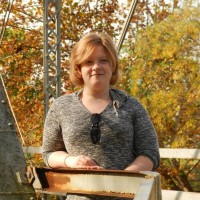
I own a lifestyle health blog where I blog about mine and my daughter’s medical journey. PR friendly. Love writing reviews
Are you a patient advocate for parents who have children with 22q?
I offer parenting mentoring (yes, I’m trained; see certificate in my social media photos).
I run a local rare genetic disorder support group for parents of children who have rare genetic disorders, not just 22q.
I have 22q and gastroparesis. My daughter is 7 years old and has a mild form of cerebral palsy as well as 22q. I have a father who has 22q, and three siblings of mine have 22q, but we sadly lost one. The youngest sibling died when he was six years old. I have a stepbrother who does not have 22q.
I have a wonderful husband and three teen stepchildren and, of course, our child Isabella (Bella). I live in Otsego, Michigan, and have Bella see the Craniofacial team at U of M. We lived in Grand Rapids but now live in Otsego, MI, a small town. Bella attends public school and is mainstream with an IEP.
I have been blogging for a year.
Social Profile: https://www.facebook.com/mommiesquietplace
Website: https://amandaripsam.wordpress.com